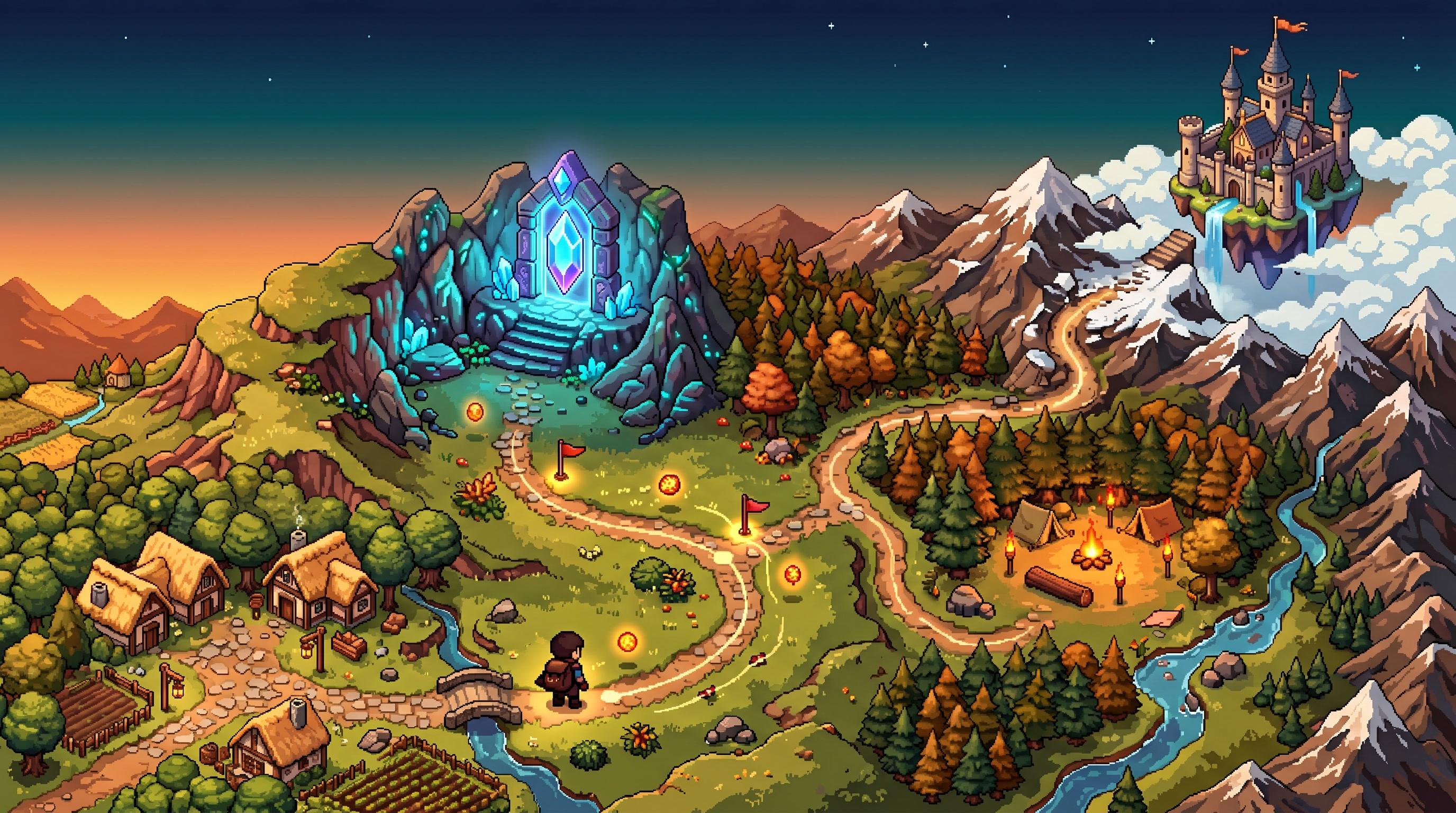
Most SaaS products lose the majority of signups within the first week. The cause is almost always the same: users never reached the moment where the product clicked.
Founders watching their activation funnel usually see the same shape. Someone signs up. They do one or two things. They close the tab. They do not come back. On day seven, the product has lost most of the people who were interested enough to create an account in the first place.
The reflex fix is to write a longer onboarding email sequence, or add a few more tooltips to the empty state, or commission a video walkthrough. Sometimes these help. Usually they do not, because they address the symptom (users dropping off) rather than the cause (users never reaching the moment where they understand why they should care).
That moment has a name: the "aha moment." It is the first time a user experiences the core value of your product in a way that makes the rest of the surface feel obvious. For Dropbox, it was seeing a file sync across devices. For Slack, it was posting the first message a teammate responded to. For Notion, it was building the first page that actually organized something they had been struggling with. Every product has one, and reaching it is the single most important event in the customer lifecycle.
Quest-driven onboarding is the most effective mechanic I have seen for getting users to the aha moment reliably. Static checklists treat onboarding as a chore to endure. Quests treat it as a journey toward a goal the user already wants. Done right, they transform the first week from a drop-off hazard into the single highest-retention period in the customer lifecycle.
This post is the playbook. The four stages of a quest-driven onboarding flow, the metrics that tell you whether it is working, concrete quest designs for three common product archetypes, and a walkthrough of how to build this with EngageFabric if you do not want to write the plumbing yourself.

The Activation Problem, Framed in Metrics Founders Care About
If you are thinking about onboarding in terms of "user education," you are thinking about it wrong. The metrics that matter are not "did they see the tooltip" — they are the ones that correlate with becoming a paying, retained customer.
Time-to-value
The single most predictive metric for first-week retention is how quickly a user experiences the core value of the product. For a collaboration tool, it is the first successful shared document. For an analytics dashboard, it is the first query that returns a useful answer. For a content platform, it is the first publish.
Research on SaaS activation consistently shows that users who reach value within the first session retain dramatically better than users who do not — and the gap does not close over time. The users who do not get there in session one mostly never come back.
Activation rate
"Activated" is a product-specific threshold that captures "this user has done enough to become valuable." Facebook's early growth team famously used "added 7 friends in 10 days" as their activation definition. Slack has used "2,000 messages sent by the team." Amplitude has used "configured 3 cohorts in 30 days." The exact threshold does not matter as much as having one — and measuring it.
Activation rate is the percentage of new signups who cross that threshold. For most B2B SaaS products, the difference between a 20% activation rate and a 40% activation rate is the difference between a struggling business and a healthy one.
Day 7 return rate
Nothing else matters if users do not come back. Day 7 return is the earliest reliable indicator of whether your product has earned a place in the user's life. Products that hit 40%+ day-7 return tend to grow. Products below 20% tend to churn out faster than they acquire.
Every quest, tooltip, email, and design decision in your onboarding should be evaluated against these three metrics. If a change does not move time-to-value down, activation rate up, or day-7 return up, it is not actually onboarding — it is decoration.
Why Static Checklists Fail
The default B2B onboarding pattern is a checklist in the corner of the dashboard: "Complete your profile. Invite a teammate. Import your data. Connect an integration." Users see it, feel mild obligation, and dismiss it by session three.
There are three reasons static checklists underperform:
They frame onboarding as chore, not journey. A checklist says "here are the boxes we want you to tick." A quest says "here is a story that will end with you getting the thing you came here for." Same steps, completely different psychology.
They do not adapt to user behavior. Every user sees the same checklist in the same order. The founder who came to evaluate the API and the marketer who came to build a landing page both see "complete your profile" as step one, which is not what either of them needed.
They do not celebrate completion. Checking a box produces a checkmark. Completing a quest produces a reward, a badge, a moment of accomplishment. The second one creates the memory that makes the user want to come back for the next quest.
The research supports this. Studies on interactive onboarding versus static tutorials consistently find that interactive, goal-framed flows drive substantially higher activation — one widely cited figure puts the gap at 50% higher activation rates for interactive onboarding.
The 4-Stage Onboarding Quest Structure
Every effective quest-driven onboarding flow I have seen follows the same four-stage arc. The names are mine; the pattern is universal.
Stage 1 — Orient

Goal: the user understands what the product is for and what it will feel like to use it.
Duration: minutes, not hours. If orienting takes more than a few minutes, you have a messaging problem, not an onboarding problem.
Typical quest steps: confirm email, set profile name, choose a use case, see the first screen that shows real content (pre-populated, demo data, or a shared team workspace). The key is that the orient stage ends with the user looking at something that feels like their product, not a blank canvas.
Anti-pattern to avoid: orient quests that demand a lot of input before any output. "Fill in your company, team size, role, use case, and industry" is an interrogation, not an orientation. Ask for the minimum, show value as fast as possible, collect the rest later.
Stage 2 — First Win

Goal: the user performs the core action of the product, successfully, and experiences the outcome.
Duration: ideally session one.
Typical quest steps: complete the first meaningful action (send the first message, run the first query, publish the first post, share the first document). This is the aha-moment stage. Everything in Stage 1 was setup for this moment, and everything in Stage 3 depends on this moment having happened.
The design question: what is the minimum viable thing a user can do that feels like a genuine win, not a tutorial? Slack's version is "send a message that your teammate reacts to." Notion's version is "create a page and share it with someone." The first win should not be a toy — it should be real output that the user would have wanted to create anyway.
Anti-pattern to avoid: first-win quests that depend on collaborator action. "Invite a teammate and wait for them to respond" puts your retention in someone else's hands. Design the first win to be completable by the user alone; make team-based wins a later quest.
Stage 3 — Habit Formation

Goal: the user returns to the product multiple times in the first week and integrates it into their workflow.
Duration: days 2-7.
Typical quest steps: complete the first win again, but better. Try a second core feature. Connect the product to a workflow they already have (Slack notification, calendar integration, browser extension). The stage ends with the user having come back three or four times.
Why this stage matters: habit formation is where time-to-value extends into time-to-retention. A user who had an aha moment but never came back got the insight but not the habit. Your product has to give them a reason to return — a notification, a scheduled output, a saved workflow — that activates without them having to remember to open the tab.
The research backing this: product-return research consistently finds that users who form a return habit within the first week retain dramatically better than users who do not. The 7-day mark is not arbitrary; it is where voluntary motivation starts turning into automatic behavior.
Stage 4 — Power User
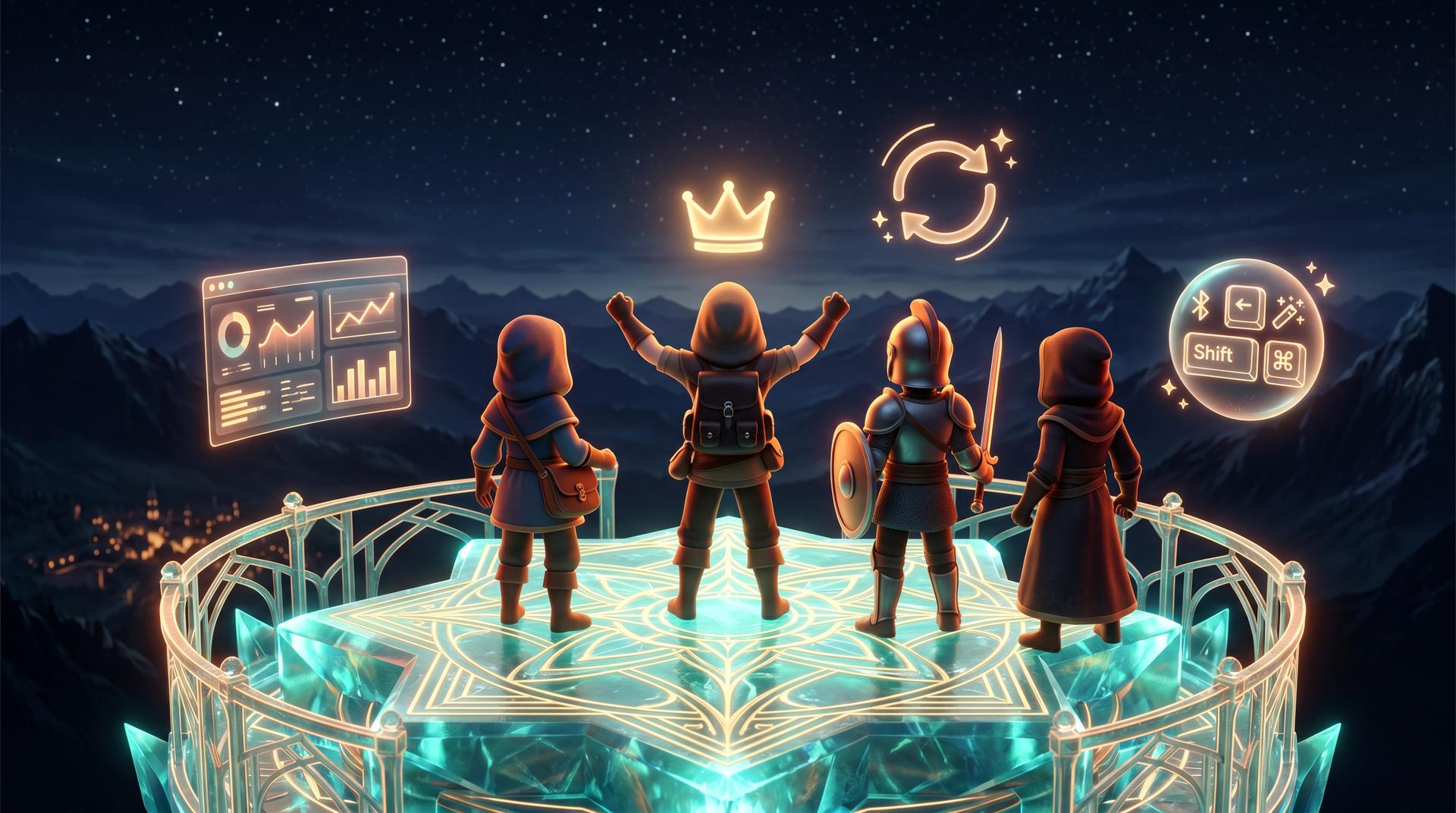
Goal: the user discovers the features that differentiate your product from alternatives, and adopts the workflows that make switching away painful.
Duration: weeks 2-4.
Typical quest steps: invite a teammate, upgrade a workflow from basic to advanced, configure an integration, set up a recurring output, learn a keyboard shortcut or power feature. This stage is about depth, not breadth.
Why this stage matters commercially: power users are where expansion revenue comes from. A solo user who uses 20% of your features is a churn risk. A team of four who use 60% of your features is a lifelong customer. Stage 4 quests are how you get from one to the other.
Concrete Quest Designs for Three Product Archetypes
Abstract stages are useful for thinking; concrete quests are useful for building. Here are three quest-flow designs for common B2B SaaS archetypes.
Archetype A: Collaboration Tools
Products like project management, team chat, document collaboration, and shared workspaces.
Stage 1 — Orient (minutes):
- "Welcome to the team." Complete profile with name and avatar.
- "Explore the demo project." View the pre-populated workspace and see what it looks like when populated with real work.
Stage 2 — First Win (session 1):
- "Create your first real thing." User creates a task / document / board that represents something from their actual work. XP reward, visible celebration.
- "Share it with someone." User sends a collaboration link. (Critical: the quest completes when they send the link, not when the collaborator responds. Do not gate retention on external action.)
Stage 3 — Habit Formation (days 2-7):
- "Return and update your work." Complete 3 edits over the first week.
- "Connect your workflow." Enable notifications in Slack, email, or browser.
- "Get the app." Install the desktop or mobile app. (Activation metric: installed app dramatically correlates with retention.)
Stage 4 — Power User (weeks 2-4):
- "Invite your team." Send invitations to 3 teammates. Reward scales with team size.
- "Set up automation." Create a recurring view, automation, or scheduled report.
- "Master the power features." Use a keyboard shortcut, integrate with a third-party tool, or customize a template.
Archetype B: Analytics Dashboards
Products like product analytics, BI tools, observability, metrics platforms.
Stage 1 — Orient (minutes):
- "See your demo data." Show a pre-populated dashboard with realistic (or actually ingested) data.
- "Explore a dashboard." User clicks into any metric and sees it explained with real values, not lorem ipsum.
Stage 2 — First Win (session 1):
- "Ask your first question." User creates a chart, query, or segment that answers something they actually wanted to know. This is the hardest quest to design because the user has to go from "exploring" to "investigating," and most analytics tools make that leap harder than it needs to be. Invest heavily here.
- "Save your first dashboard." The quest completes when the user saves a configuration — creating the seed of a returning artifact.
Stage 3 — Habit Formation (days 2-7):
- "Return to your dashboard." Check in 3 times during week one.
- "Schedule a report." Set up a recurring email or Slack delivery. This single quest is often the highest-leverage retention mechanic in analytics products, because it converts a pull interaction into a push interaction.
- "Share with a colleague." Send the dashboard link to someone on the team.
Stage 4 — Power User (weeks 2-4):
- "Build a funnel." User creates a multi-step funnel analysis.
- "Set up alerting." Configure at least one alert on a metric.
- "Integrate with your stack." Connect a data source, warehouse, or destination.
Archetype C: Content Creation Platforms
Products like blog platforms, design tools, video editors, document generators, page builders.
Stage 1 — Orient (minutes):
- "Pick your starter template." User selects from a curated library — never starts from blank.
- "See what good looks like." Show an exemplar piece of content so the user has a target.
Stage 2 — First Win (session 1):
- "Publish your first piece." User creates and publishes (or exports) their first piece of content. The act of publishing is the aha moment for most content tools — it converts "playing" into "producing."
- "Get your first reaction." If the product has a sharing or social component, the quest completes when the user shares the published piece.
Stage 3 — Habit Formation (days 2-7):
- "Publish three pieces in your first week." Raw output volume. Content creators who publish multiple times in week one are the ones who stick.
- "Organize your library." Create a collection, tag, or folder structure. This is a commitment moment.
- "Set up your profile or brand." Customize the presentation layer so the output feels like theirs.
Stage 4 — Power User (weeks 2-4):
- "Try the advanced features." Use templates, automation, or AI-assisted features.
- "Invite a collaborator." Bring a teammate into the creative process.
- "Connect your distribution." Set up auto-publishing to the user's own site, social channels, or distribution list.
How to Measure Whether It Is Working
A quest-driven onboarding system is only useful if you can tell whether it is working. The metrics that matter break into three tiers.
Tier 1: Funnel completion by stage
For each of the four stages, what percentage of new signups complete it? A healthy funnel looks roughly like this:
- Stage 1 (Orient): 80%+ of signups complete. If you are below this, your orient flow is too long or too demanding.
- Stage 2 (First Win): 40-60% of signups complete in session one. If you are below 30%, the first win is too hard or your messaging did not set the right expectation.
- Stage 3 (Habit Formation): 25-40% of signups complete within 7 days.
- Stage 4 (Power User): 10-20% of signups complete within 30 days.
The absolute numbers vary by product, but the relative decay between stages is more revealing than any single stage's number. If you are losing 70% between stages 1 and 2, something about the first win is broken. If you are losing 90% between stages 2 and 3, you have an aha-moment-without-a-reason-to-return problem.
Tier 2: Time-to-first-value
Segment new users by how quickly they completed Stage 2. Users who hit first win within 10 minutes almost always retain. Users who took a day or longer retain at a dramatically lower rate. Users who never hit first win churn at rates that exceed 80% for most products.
This is the metric that tells you where to invest. If your time-to-first-value is 2 hours and your competitors are at 10 minutes, no amount of feature parity will close the retention gap.
Tier 3: Cohort-level retention by quest progression
The deepest signal comes from cohorting users by how far they got in the quest flow and comparing retention curves. Users who completed Stage 3 should have dramatically better day-30 retention than users who only completed Stage 1. If they do not, your quest flow is not actually driving retention — it is correlating with it but not causing it, and you need to redesign the specific quests.
EngageFabric's analytics module surfaces these metrics as funnels and retention cohorts. Every quest becomes a funnel step, and the platform computes completion rates and retention correlations automatically — so you can see whether a quest is pulling its weight without building the instrumentation yourself.
Implementing This With EngageFabric
If you want to build this from scratch, the scope is not trivial — quest state management, event-driven progress tracking, timezone-aware expiration, reward granting, progress broadcasting to the UI. It is weeks of engineering before you get to the onboarding design work itself.
If you want to skip to the design work, here is what the integration looks like with EngageFabric:
import { PlayPulse } from '@engagefabricsdk/sdk';

const client = new PlayPulse({
  apiKey: 'your-project-api-key',
  projectId: 'your-project-id',
});

// Identify the user when they sign up
await client.identify(userId, {
  displayName: 'Alex',
});

// Track onboarding events — the rules engine advances any quests
// whose steps are configured to listen for this event type
await client.events.track({
  externalUserId: userId,
  eventName: 'workspace_created',
  properties: { templateId: 'team-collab' },
});

// Surface the user's active quests in the UI
const playerId = client.getPlayerId();
const quests = await client.quests.getPlayerProgress(playerId);
The quests themselves — their steps, targets, rewards, and sequencing — are configured in the admin console, not hardcoded. That is deliberate. The right sequence of onboarding quests is something you discover by watching real users, not something you can write down in advance. Being able to change a quest's target count or reorder a sequence without a code deploy is the difference between a system that improves and one that ossifies.
Quest steps support counting specific events (COUNT), daily streaks (STREAK), summing event properties like XP or revenue (PROPERTY_SUM), and counting unique values like "visited 5 different pages" (UNIQUE). Rewards can be XP, in-game currencies, or badges. Prerequisites let you chain quests so Stage 2 unlocks when Stage 1 completes. That covers virtually every quest design in this playbook without custom code.
Why Onboarding Is The Highest-ROI Place to Put Gamification
If you read the other posts in this series, you have seen the argument that gamification works best when it is aimed at behaviors you actually want and iterated over time. Onboarding is the place in the product where that argument is most true.
The behaviors you want in onboarding are unambiguous: reach the aha moment, return in week one, adopt the features that create switching cost. The feedback loop is short: weeks, not months. The metric is concrete: activation rate. The downstream impact on the business is enormous: a 10-point increase in activation rate compounds through the funnel and typically translates to double-digit increases in long-term revenue.
Every other place you might apply gamification — ongoing engagement, social features, community building — is valuable but diffuse. Onboarding is the one surface where the causal chain from mechanic to revenue is short enough to measure, iterate on, and optimize with confidence.
If you are going to invest in gamification infrastructure, invest here first. The rest of the mechanics ride on the foundation that onboarding builds.
Key Takeaways
Activation is a metrics problem, not an education problem. Time-to-value, activation rate, and day-7 return are the three numbers that matter. Optimize for those, not for "did they see the tooltip."
Static checklists underperform interactive quests because of framing, adaptation, and celebration. The gap is large and consistent across product categories.
The four-stage quest arc — Orient, First Win, Habit Formation, Power User — applies to nearly every SaaS product. The specific steps differ by archetype; the arc does not.
Design the first win to be completable by the user alone. Do not gate retention on external collaborator action.
Measure funnel completion by stage, time-to-first-value, and retention cohorts. If you cannot answer these three questions, the onboarding quest flow cannot be improved.
Onboarding is the highest-ROI place to apply gamification. The behaviors are clear, the feedback loop is short, and the downstream revenue impact is quantifiable.
Building onboarding and do not want to write the quest plumbing from scratch? EngageFabric ships configurable quests, XP, achievements, and an analytics module that measures activation funnels out of the box. Read the documentation or try the live demo.