Your internal tools are suffering from an adoption problem. You know it. The helpdesk tickets know it. The Slack channels full of "wait, where do I find X again?" know it.
You shipped a new CRM, a project management system, a knowledge base, or an onboarding platform -- and your employees are using it reluctantly, incompletely, or not at all. The feature utilization reports tell you that 60% of the platform is going untouched. Onboarding completion rates hover somewhere embarrassing. And every quarter, you're defending the ROI of tools that cost a small fortune.
Here's the uncomfortable truth: the problem usually isn't the tool. It's that there's no reason for people to care.
Gamification -- when done right -- is how you give them a reason. Not with gimmicks, not with forced fun, and definitely not by bolting a leaderboard onto a compliance training module and calling it engagement. But with progression systems, quests, and mechanics that match your people's actual motivations.
This post is for two kinds of readers:
- IT leads and engineering managers at mid-market and enterprise companies who are evaluating gamification solutions to embed into internal tooling -- and who need something IT security will actually approve.
- Product leads and founders at SaaS companies building internal tools for enterprise customers, who want to understand what the IT buyer is actually looking for and how to frame the value.
We'll cover why most enterprise gamification fails, which mechanics actually work for internal tooling, how to get IT sign-off without a six-month vendor evaluation, and what a realistic implementation looks like. No case for gamification in theory -- this is about the practical path from "our adoption is broken" to "our people are actually using the thing."
The Engagement Gap Is Real -- and Expensive
Before we talk about solutions, let's frame the actual problem.
90% of employees say gamification makes them more productive. Yet 43% report they've never noticed any gamification at their workplace. That's not a technology problem -- that's a massive, untapped opportunity sitting in plain sight.
The financial stakes are just as stark. Disengaged employees cost organizations an estimated $8.9 trillion in lost productivity globally -- roughly 9% of world GDP. Gallup's ongoing research consistently shows that highly engaged teams are 21% more profitable than their disengaged counterparts and see 41% lower absenteeism.
For IT leaders specifically, the cost shows up in measurable places:
| Symptom | What it actually costs |
|---|---|
| Low CRM adoption | Incomplete data → bad forecasting → missed revenue |
| Compliance training drop-off | Regulatory risk, repeated remediation |
| Slow onboarding completion | New hires take longer to ramp → higher turnover |
| Knowledge base abandonment | Helpdesk ticket volume stays high → IT overhead |
| Internal tool resistance | Change management fatigue → slower digital transformation |
The question isn't whether engagement matters. It's whether gamification is the right tool to address it -- and whether you can implement it without repeating someone else's expensive mistakes.
Why Most Enterprise Gamification Fails
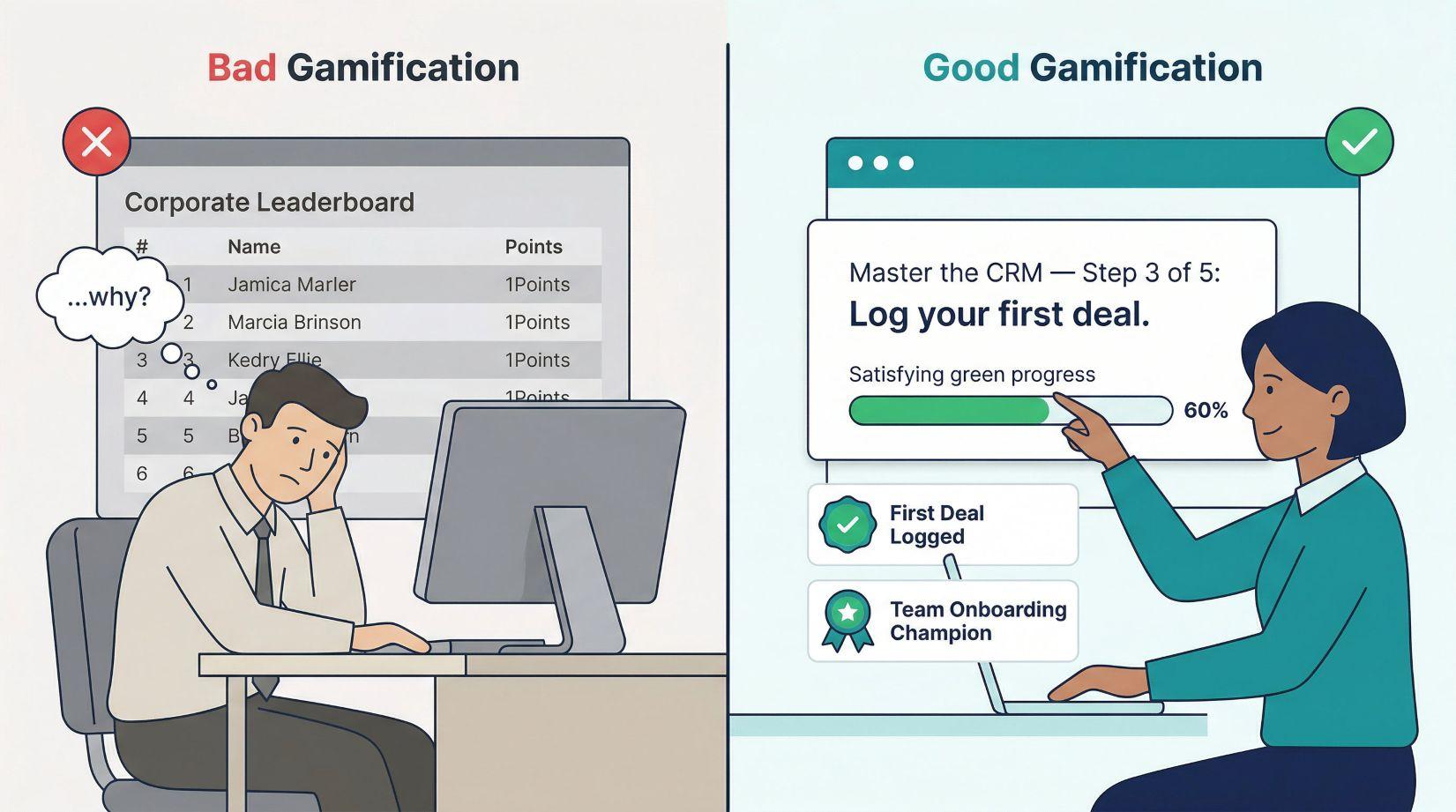
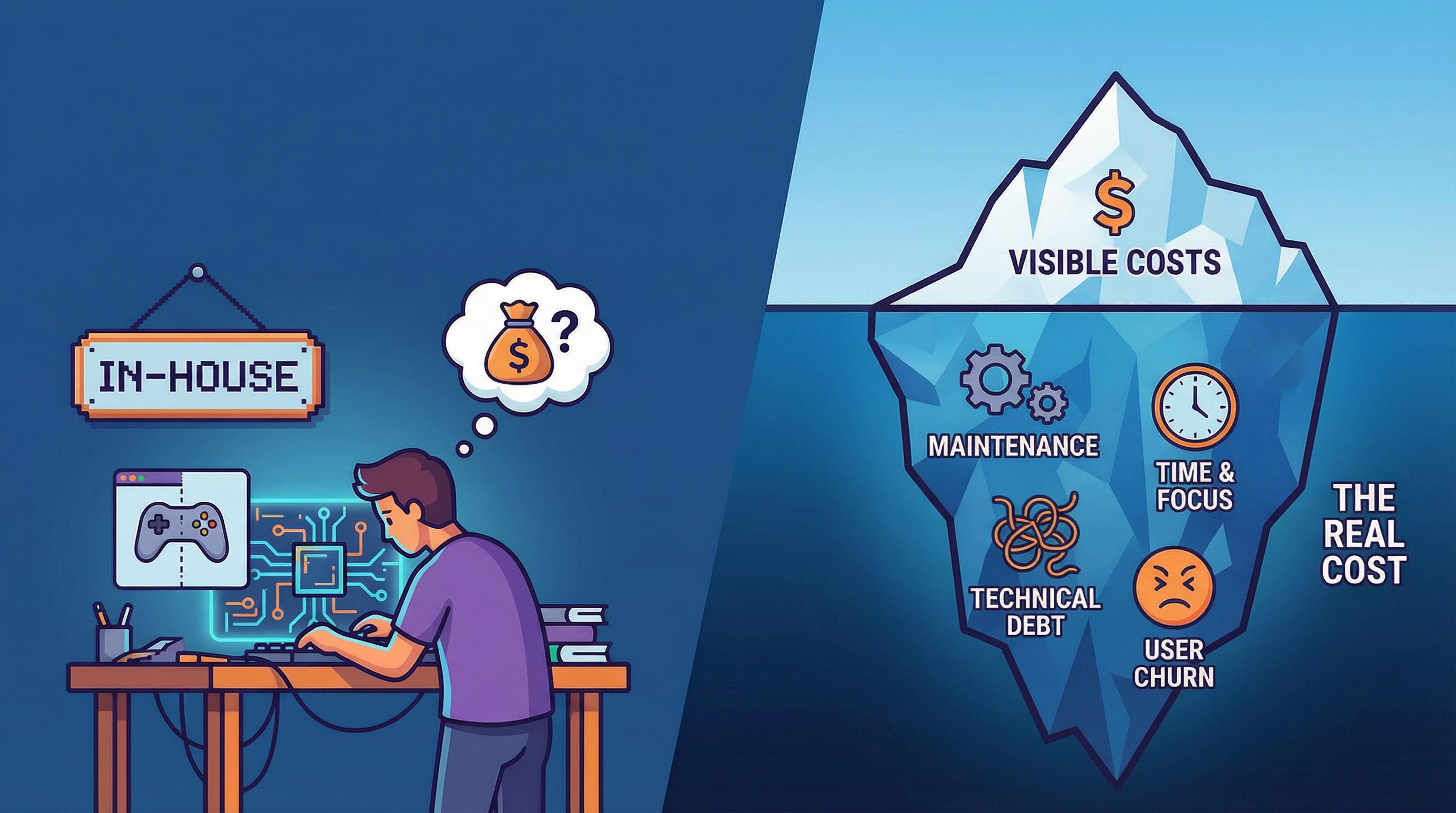
The failures are well-documented. United Airlines ran a lottery-based rewards program in 2018 where employees' 401k contributions were replaced by lottery ticket chances for prizes. Employee protests were loud enough that the company had to abandon the program. A GlobeNewswire report attributed $700 million in failed U.S. gamification projects to one-size-fits-all approaches that ignored employee motivations.
These failures don't mean gamification doesn't work. They mean bad gamification doesn't work. The patterns that kill enterprise implementations are consistent:
1. Gamifying the wrong thing. If you gamify a metric employees can easily game (say, "number of CRM entries"), you get Goodhart's Law: the metric becomes the target, and the entries become junk data. Employees figure out the minimum viable action to earn points, and the underlying problem doesn't move.
2. Extrinsic rewards without intrinsic value. Points and badges are powerful when they mark genuine progress toward something employees care about -- learning a skill, completing a meaningful project, becoming the go-to person on a team. When they're detached from anything meaningful, they feel patronizing.
3. One-size-fits-all mechanics. Leaderboards work brilliantly for competitive, public-facing sales teams. They can actively harm collaboration in teams that depend on peer trust. Streaks work for repetitive daily behaviors. They're wrong for project-based work with natural rhythms. The mechanic has to match the behavior.
4. No iteration loop. Most enterprise gamification implementations are treated like a software launch: you configure it, you ship it, you move on. But gamification needs to be tuned. If the XP curve is too steep, people give up. If it's too flat, there's no satisfaction in advancing. Without analytics and the ability to adjust without a code deployment, you're flying blind.
5. Mandated participation. The moment your employees feel like they have to engage with a gamified system, it stops working. Gamification should make the right behavior the path of least resistance, not add pressure.
The Five Use Cases That Actually Work for Internal Tools
Internal tooling gamification isn't one thing. The use cases that consistently show results are distinct from each other, and the mechanics that work for each are different.
1. Onboarding and Ramp-Up
The problem: New hires are overwhelmed. They complete the HR paperwork, sit through orientation, and then get dropped into 47 different tools with a "figure it out" energy. Structured onboarding improves retention by 82% and productivity by 70% -- but most onboarding programs collapse in the execution.
What works: Quest-based onboarding. Instead of a checklist, new hires follow a guided journey: "Complete your profile → Log your first ticket → Join a team meeting → Get your first peer review." Each objective is a quest step. Completion unlocks the next phase. Progress is visible and satisfying.
Delta Airlines gamified its customer service representative onboarding and achieved a 521% increase in training capacity and a 19% improvement in productivity -- without adding headcount.
Mechanic: Quests with sequential objectives, milestone badges, XP for completion.
2. Platform and Feature Adoption
The problem: You shipped a new internal tool. Two months later, 40% of employees have never opened it, and 70% of the feature set is completely untouched.
What works: Discovery quests and exploration achievements. "Used the advanced filter for the first time" → achievement unlocked. "Created your first dashboard" → XP award. "Connected a third-party integration" → badge. These mechanics reward exploration without forcing it. The employee feels smart, not nagged.
Mechanic: Achievements for feature discovery, XP for depth of usage, optional daily challenges.
3. Compliance and Mandatory Training
The problem: Compliance training has a completion problem. It's mandatory, nobody wants to do it, and the typical response is to click through as fast as possible without retaining anything.
What works: E-learning courses with gamified elements see a 90% completion rate vs. 25% for non-gamified programs. The mechanics aren't complicated: progress bars, module completion badges, team-based completion challenges ("Your team is at 8/12 completed -- finish before Friday to earn the Team Compliance Champion badge"). Social accountability is remarkably effective here.
SAP's internal gamified learning platform resulted in a 70% increase in module completion rates and a 30% boost in knowledge retention.
Mechanic: Progress bars, team challenges, completion badges, streak-based reminders.
4. Knowledge Base Contribution
The problem: Your internal knowledge base is maintained by four people who care, and slowly outdated by everyone else. The people with the most useful knowledge are the busiest.
What works: Contribution points and recognition mechanics. Points for creating a new article, for getting a "helpful" upvote, for updating outdated content. Public recognition in team channels when someone crosses a contribution milestone. The goal isn't to make documentation a game -- it's to make the right behavior visible and valued.
SCN (SAP Community Network) has used leaderboards and badges for knowledge contribution since 2006 -- and those achievement metrics are often used by managers as actual KPIs for staffing decisions. Recognition that has real weight drives real behavior.
Mechanic: Points for contribution, peer recognition badges, public leaderboards (optional), contribution streaks.
5. Peer Recognition and Team Building
The problem: Remote and hybrid teams have a belonging problem. Without the ambient social signals of an office, employees feel invisible, and collaboration deteriorates.
What works: Peer-to-peer recognition mechanics where employees award points or recognition badges to each other. Team challenges that require cross-functional collaboration to complete. These mechanics rebuild social connection through shared goals rather than forced social events.
A 2-year workplace wellness study incorporating gamification found sustained improvements across multiple team health measures -- not because the game was fun, but because it created structured reasons for teammates to interact.
Mechanic: Peer recognition points, team challenges, collaborative quests, shared milestones.
Choosing the Right Mechanics for Your Workforce
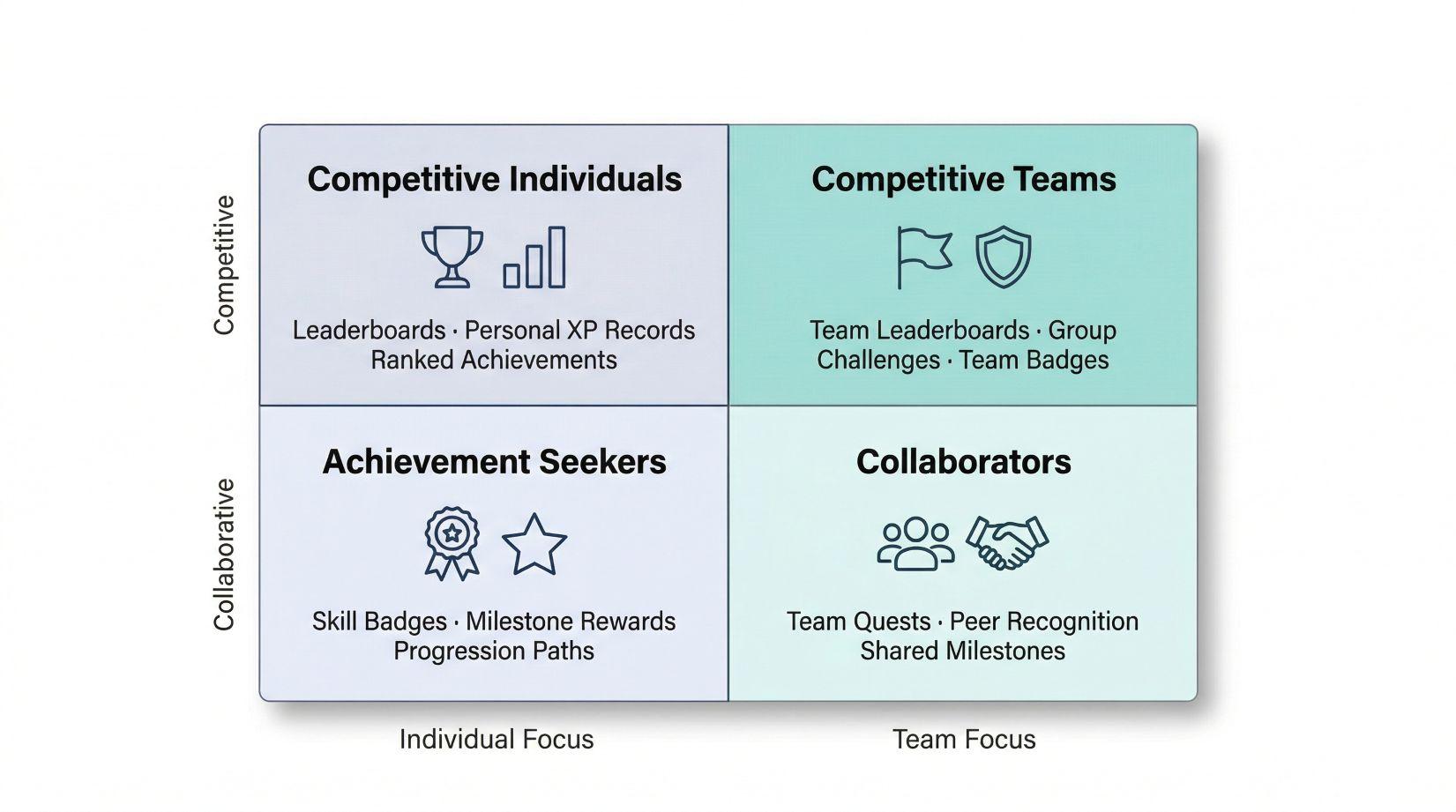
Not all mechanics work for all teams. Getting this wrong is the most common source of gamification failure in enterprise contexts.
| Workforce type | What they respond to | What backfires |
|---|---|---|
| Sales teams | Leaderboards, competitions, public rankings | Forced collaboration mechanics that hide individual contribution |
| Engineering teams | Mastery badges, skill progression, technical achievements | Arbitrary points for activity that has no relationship to engineering quality |
| Support / service teams | Team challenges, response time streaks, peer recognition | Individual competitive leaderboards that discourage helping each other |
| Knowledge workers | Exploration achievements, contribution recognition, personal milestones | High-frequency streaks that don't match the rhythms of project-based work |
| Onboarding cohorts | Quests, guided journeys, cohort challenges | Open-ended point systems with no narrative structure |
Start with one use case and one team. Don't try to gamify your entire organization at once. Pick the use case with the clearest success metric (onboarding completion rate, compliance training completion, helpdesk ticket volume) and run a pilot. If the mechanics work, you'll see signal within 30-60 days. Then expand.
What IT Security Actually Needs to Approve This
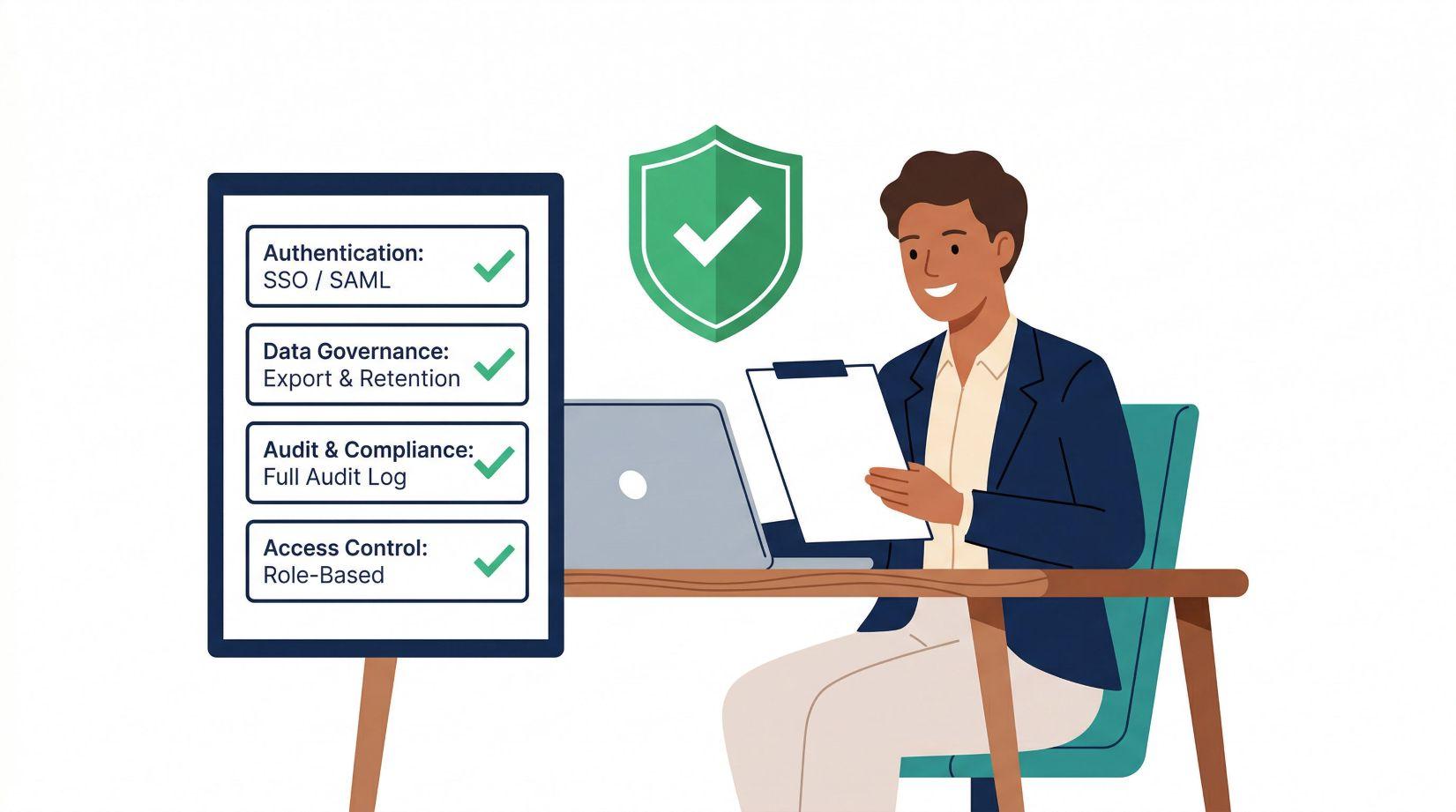
This is where most gamification evaluation conversations stall. A product manager falls in love with a platform. IT reviews it for five minutes and produces a list of blockers. The project dies in committee.
If you're the IT lead reading this, here's the checklist you should be running. If you're a product manager trying to get IT buy-in, here's what you need to have answers for before the conversation.
Authentication and identity:
- Does the platform support SSO with your existing identity provider (SAML 2.0, OIDC)?
- Can it integrate with Azure Active Directory, Okta, or Google Workspace?
- What happens to a user's gamification state when they're offboarded?
Data governance:
- Where is employee data stored? What region?
- What data does the platform collect, and can you limit the collection scope?
- Can you export all player data in standard formats (CSV, JSON) at any time?
- What's the data retention policy, and can it be configured?
Audit and compliance:
- Is there a comprehensive audit log of all admin actions and configuration changes?
- Can the audit log be exported or streamed to your SIEM?
- Does the platform maintain logs sufficient for SOC 2 or ISO 27001 alignment?
Access control:
- Is there role-based access control for the admin console?
- Can you restrict which admins can see which employees' data?
- Is there a separation between super-admin capabilities and team-admin capabilities?
Security architecture:
- How is data encrypted in transit and at rest?
- What does the vulnerability disclosure process look like?
- Are there rate limits and anti-abuse measures at the API layer?
The honest answer is that most consumer-grade gamification platforms don't pass this checklist. They're built for external-facing SaaS products where the user is a customer, not an employee. Enterprise-grade requirements -- SSO, audit logging, role-based access, data export -- are often either missing or gated behind custom enterprise pricing that requires a sales conversation.
EngageFabric was built with these requirements in scope: Google and GitHub OAuth, audit logging, role-based team management, and CSV/JSON data export are included today -- with SSO/SAML and OIDC support on the near-term roadmap. The platform is currently in alpha -- which means you get enterprise-grade features at early-adopter pricing and direct input into the roadmap.
The Rollout Playbook: Avoiding the Eye-Rolls
Getting the technology right is 40% of the problem. The other 60% is change management. Here's the rollout approach that consistently works.
Phase 1: Pilot with one team (weeks 1-4)
Pick a team with a measurable problem (onboarding completion rate, compliance training backlog, knowledge base contribution). Implement one mechanic -- quests for onboarding, or completion badges for training. Set a baseline metric before you start. Don't announce it as "gamification" -- announce it as a new onboarding experience or a new training flow. Let the mechanics speak for themselves.
Phase 2: Measure and adjust (weeks 5-8)
Look at your baseline metric. Did onboarding completion improve? Did training completion rate move? If yes, identify which specific mechanics drove the change. If no, review whether you gamified the right behavior. This is why analytics and configurable mechanics matter: you need to be able to adjust without a code deployment.
Phase 3: Champion-led expansion (weeks 9-16)
Identify 2-3 employees in the pilot group who visibly engaged with the system and saw benefit. Make them internal champions. Have them explain the experience to their peers in their own words -- employee-to-employee communication about gamification is far more credible than IT-to-employee communication. Expand to adjacent teams using what you learned in the pilot.
What not to do:
- Don't mandate participation. Ever. "Your manager will review whether you completed your gamified onboarding" kills intrinsic motivation instantly.
- Don't gamify activities employees already hate. If your compliance training is genuinely terrible, gamification will make the problem more visible, not fix it.
- Don't launch company-wide on day one. The pilot-measure-expand loop is how you avoid the expensive failures.
The Implementation Checklist
Before you commit to any gamification platform for internal tooling, work through this list:
Strategy:
- Identified one specific use case with a measurable baseline metric
- Selected mechanics appropriate for your target workforce type
- Defined what success looks like at 30, 60, and 90 days
- Chosen a pilot team of 20-100 people before company-wide rollout
Technical:
- SSO integration with your existing identity provider
- Role-based access control for admin console
- Audit log export for compliance
- Data residency confirmed for your regulatory requirements
- API or SDK integration path confirmed for your existing tooling
Platform evaluation:
- Self-serve trial or demo available without a sales call
- Admin console allows configuration changes without code deployments
- Analytics dashboard shows the metrics you care about (completion rates, retention, activation)
- Webhooks available to sync gamification events to your existing systems
- Pricing is transparent and scales predictably with your employee count
Rollout:
- Change management plan that doesn't mandate participation
- Internal champions identified in the pilot cohort
- Feedback channel for employees to report issues or suggestions
- Iteration timeline defined (when will you review and adjust mechanics?)
What Good Looks Like
To close the loop: here's what a well-implemented internal gamification system looks like in practice at a mid-market company.
A new hire joins the engineering team. On day one, they're automatically enrolled in an onboarding quest: "Get Started at Acme." The quest has five stages -- complete your tool setup, log your first ticket, attend your team standup, submit your first code review, and introduce yourself in the team channel. Each step unlocks the next. Completing the full quest earns the "Acme Engineer: Level 1" badge, visible on their internal profile.
Over the next month, they naturally earn achievements as they explore the platform: "First production deploy," "First customer ticket resolved," "First knowledge base article created." These aren't assigned to them -- they're triggered automatically by events in the connected tools. The admin console required no code deployment to set up any of this.
Their manager can see in a dashboard that the new hire completed onboarding in 12 days (down from the previous average of 23), has contributed to the knowledge base twice, and resolved tickets at above-average speed. There's no score attached to those observations -- it's context, not surveillance.
Six months later, the new hire is in the top quartile of the team leaderboard for knowledge base contributions. Not because they were competing -- because the recognition mechanics made contribution feel worthwhile.
That's gamification done right. Not points bolted onto a broken process. Mechanics that make the right behavior visible, rewarding, and self-reinforcing.
Try EngageFabric for Your Internal Tools
EngageFabric is a gamification API built for exactly this use case: product teams building internal tools, and IT leaders who need enterprise features without enterprise friction. XP systems, achievements, quests, leaderboards, and real-time WebSocket events -- integrated with your existing stack via a TypeScript SDK and a no-code admin console.
For enterprise internal tooling specifically: OAuth integration, audit logging, role-based team management, and analytics data export are included today. SSO/SAML is on the roadmap. No custom contract required.
We're currently in alpha. If your team is building or deploying internal tooling and you're evaluating gamification as an engagement layer, we'd like to work with you directly.
Statistics on gamification completion rates, employee productivity, and engagement improvements are sourced from TalentLMS, Gallup, and peer-reviewed organizational research. Individual results vary significantly based on mechanic design, workforce type, and implementation quality. The Delta Airlines and SAP case study figures are publicly documented implementations from their respective corporate communications.